

Director discovers the best person to tell a story about the Mona Lisa
Today’s broadcast day! Museum Secrets: Inside the Louvre broadcasts for the first time tonight on History Television at 10 PM ET/PT. Before you tune in on TV, check out this interview with the Director of the episode.
An Interview with David New
Amanda: How did you figure out who could best tell the story about the Mona Lisa?
David: We spent a long time calling people who had written books about it and we considered talking to police detectives or people from other kinds of professions who might tell the story in a slightly unexpected way.
We had chosen an author, but when we were having trouble coordinating the dates for filming, I started considering our options again. A few months earlier, I had come across the website of a filmmaker (Joe Medeiros) in the United States who was making a documentary about the theft of the Mona Lisa. I had sent an email and hadn’t heard back, but almost at the last minute I gave it one last try.
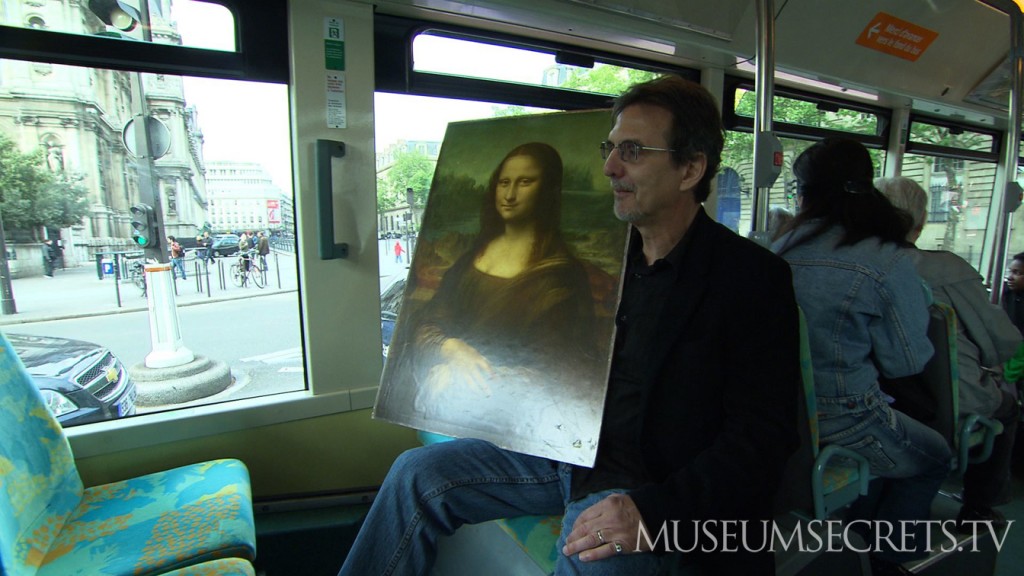
We got Joe Medeiros to tell the story, who not only had been obsessed with the story for thirty-five years, but as an added bonus, had a comic streak from his years as a head writer for Jay Leno that suited that story perfectly.
I had wanted to get someone to ride the bus with the Mona Lisa, following the route the thief took, just because I thought it would be funny. Finding Joe to tell the story was what made that idea come true.
Amanda: What made you want to direct this episode of Museum Secrets at the Louvre?
David:
Museums are not just collections of objects, they’re places where stories are kept.
And what storyteller wouldn’t want to get the chance to tell some of them? I certainly did.
The Louvre could only be a great subject. It was the palace of Napoleon, and a lot of the turning points in French history took place within its walls. So, if you like stories it’s a pretty great museum to explore.
Amanda: What was it like shooting in Paris at the Louvre?
David:
The Louvre is really at the pinnacle of French culture. The people we met there were very impressive individuals, people of enormous culture and intelligence. It was kind of a thrill sometimes just to be around them.
At the same time, it could be difficult, because this incredible institution has a culture of its own, a hierarchy and a bureaucracy that was so extensive and evolved that it was a challenge to figure out. We were fortunate that the Louvre representative who oversaw our shoot really made enormous efforts to get us everything we needed - efforts that as an outsider, I probably never even quite understood.
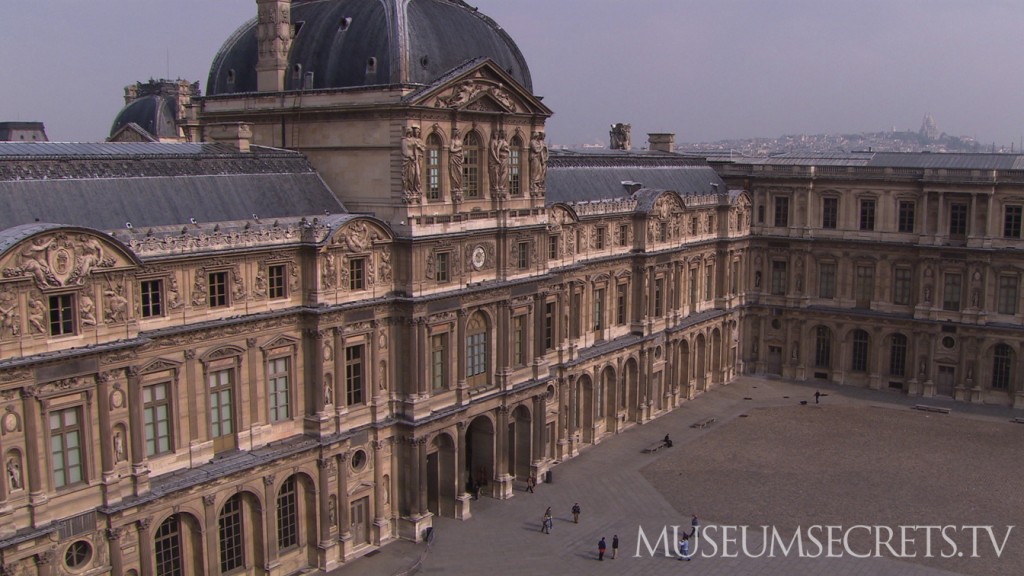
Amanda: Tell us about how you navigated the most challenging moment during the production of the episode.
David: The most challenging moment was probably our arrival on the first day. The security at the Louvre is quite tight and we had a fairly large crane with us and an extra truck they weren’t expecting. There was a lot of tension.
I was simultaneously being berated in French for not having the right number of vehicles, and yelled at urgently in English by my cameraman, who was disappearing into some elevator with the wrong equipment and a security guard who couldn’t understand him.
I had heard that the Louvre had in the past refused to let people enter if even one name was wrong on their paperwork, so I was not entirely sure the plug wasn’t going to get pulled on the whole operation at that moment. Fortunately we made it in, but I can’t claim much credit, I just smiled and said sorry a lot.
Amanda: What were the rewarding pay-off moments you had while making Museum Secrets: Inside the Louvre?
David:
As documentary filmmakers, we got the privilege of going backstage everywhere. We went up to the rooftops with the Louvre fire department and into a hidden musician’s balcony with the head of Security. We got to be in the museum when it was closed, instead of sharing it with 30,000 other visitors.
But what I appreciate most is the chance I got to meet the people there, and to see how the museum is run, and what the people are like who work there. Because people are actually way more fascinating than art - even the Mona Lisa.
The other high point was the dinner the jousters took us too after we finished shooting their scene, where a slightly crazy small-town restaurant owner took a liking to my sound man and started kissing him on his bald head until I was incapacitated with laughter.
Amanda: Tell us about something that you discovered about the Louvre that is not in the show.
David: I spent some time thinking about the Da Vinci Code and whether to address it in the episode. I discovered that the whole underlying premise of the book (that Jesus Christ had raised a family with Mary Magdalene,) had sprung from an elaborate con that had been perpetrated in France, by a man named Pierre Plantard. He had hidden falsified documents in the National Library, in an attempt to give himself a fictional royal lineage, and set in motion a train of events that has had treasure hunters and conspiracy theorists chasing their tails for half a century. We didn’t include it in the film, but it is a marvelous story.