
Athens' Weapon
How did the Athenians save their city from an overwhelming Persian invasion?


To view this site, you need to have Flash Player 9.0.115 or later installed. Click here to get the latest Flash player.



The world’s most important museum dedicated to the history of ancient Greece, the National Archaeological Museum boasts 11,000 exhibits from 7000 BC to the Roman conquest.
In this episode, we accelerate an ancient warship to ramming speed to discover why Athenian democracy beat Persian tyranny, then visit a king’s grave to reveal how bogus archeology helped fuel the pseudo-historical ravings of Adolf Hitler. We suit volunteers in armor made of bronze and armor made of linen, and then shoot arrows at them to discover which is better. (Spoiler: Alexander the Great preferred linen.) We visit the cave where Plato and Pythagoras secretly imbibed psychedelic chemicals, then go underground to face our fears in the labyrinth that inspired the myth of the Minotaur. And finally, we meet an engineer who has spent a lifetime recreating an ancient gadget called the Antikythera Mechanism to reveal its mysterious purpose.
How did the Athenians save their city from an overwhelming Persian invasion?
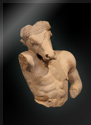
Did a natural underground labyrinth on a Greek island inspire the legend of the Minotaur?
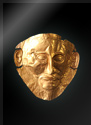
What were the historic repercussions when an a-type archaeologist tried to prove the legends of Homer were true?
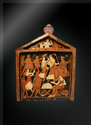
Were the visions experienced by Plato during a religious festival caused by a psychedelic herbal drink?
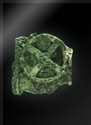
What is the purpose of the enigmatic object known as the Antikythera Mechanism – a rust encrusted artifact found deep beneath the sea?
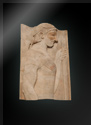
Why did Alexander the Great reject bronze for amour made of cloth?

Produced by Kensington Communications in association with Shaw Media,
with the participation of the Bell Broadcast and New Media Fund and the Canada Media Fund.
Site Design and Development by Pixelpusher
©2013 Kensington Communications All Rights Reserved


